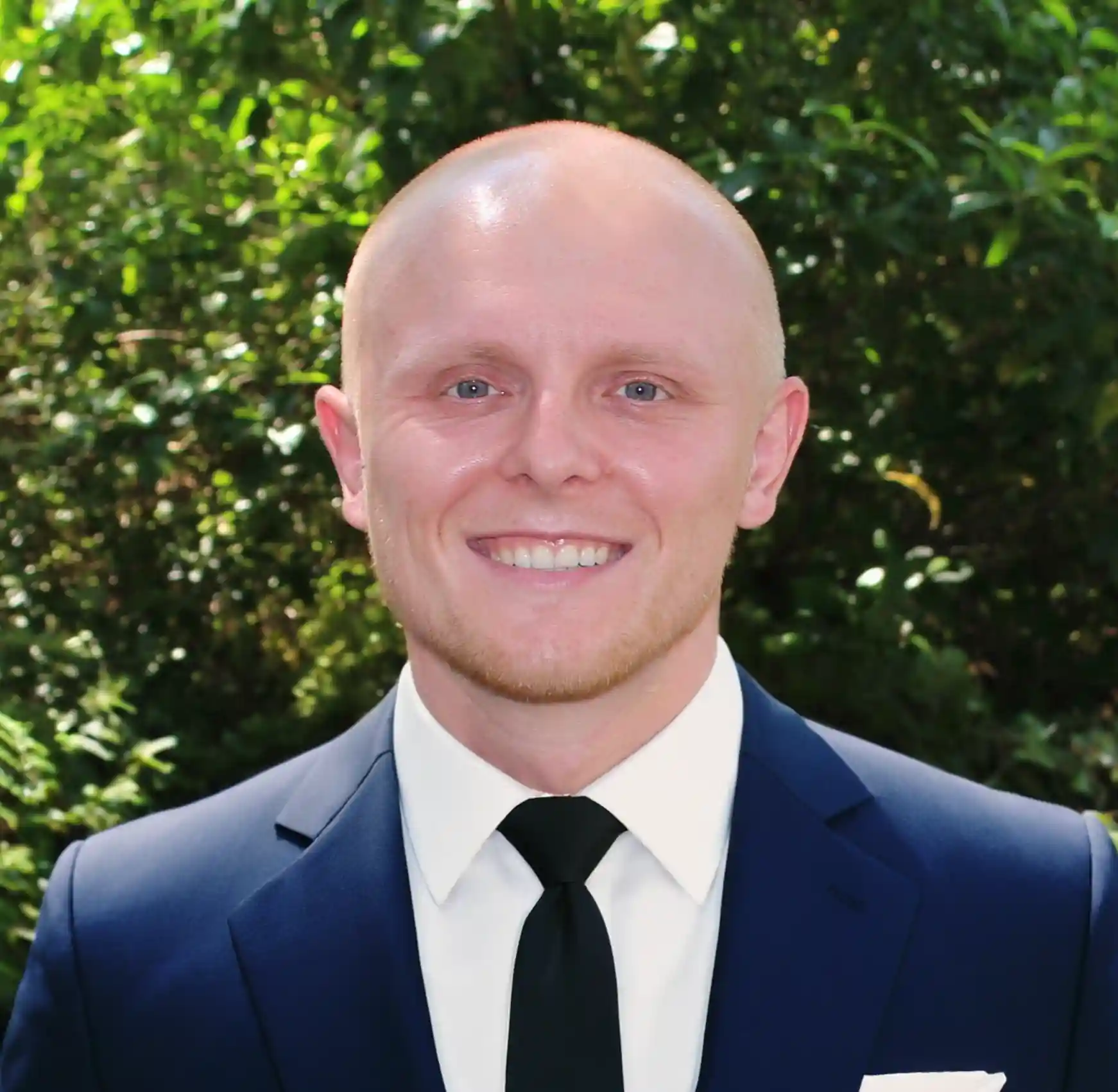
Joshua Aust · Mississippi Native · Owner-Operator
Caldric Capital
Joshua Aust
Founder, CCO & Investment Adviser Representative
Principal Office
Seminary, MS
Focus
Systematic Tactical Allocation
Standard of Care
Fiduciary, Fee-Only
Education
Business Administration, William Carey
“It is a great mistake not to seize the opportunity.”
“Come! We have a long road, and much to do.”
“The eternal paradox of peak performance in chess, or any endeavor, really, is how to learn from your failures while still carrying on as if you are invincible. You must learn and forget simultaneously.”
Systematic at the framework level. Personal at the implementation level.
I was born and raised in Hattiesburg, Mississippi, where I graduated from Oak Grove High School. I grew up watching the men in my family run their own businesses. My dad ran an insurance agency and taught me how difficult certain seasons of business ownership could be. I saw what ownership gave him, too: the freedom to be present for every stage of my life. That combination of responsibility, pressure, and presence left an impact on me that I do not expect to outgrow. People have often opened up to me about things that weighed on them. Caldric is personal work because money is tied to family, pressure, control, fear, opportunity, and the life someone is trying to protect or build.
My first-hand education in markets began with crypto. I bought a small amount of bitcoin in 2015 out of curiosity, and by 2017 I was deep in the market, studying blockchains, protocols, tokens, layer-one networks, and the collision of attention, utility, speculation, and market value. By the end of 2018, I had graduated from William Carey University, was working professionally, and was passively investing in traditional markets through my employer's 403(b), while crypto still held most of my attention. Several cycles taught me how quickly prices can rise and collapse, how behavior shapes results, and how attention alone does not make exposure decisions reliable. A systematic process is needed to evaluate exposure, reduce risk, and re-enter when evidence improves.
In 2023, my dad passed away unexpectedly and tragically. I lost him at twenty-eight, and if I live to be an old man, I will eventually live more of my life without him than I was able to live with him. What followed for my family made the value of organized, trustworthy financial guidance real in a way no textbook could. I do not know that I would be building Caldric if I had not lost my dad. It is a large part of what led me here.
The final catalyst was a friend saying, ‘I wish you could just manage my money for me.’ I took that seriously because I had already been doing the work for myself. I read constantly, mostly biographies and autobiographies of business builders and history, and I try to stay disciplined in the small daily things, training and eating well among them. Business classes, podcasts about people who build things, e-commerce work, personal investing, family experience, and that conversation all pointed in the same direction. If one person has a real problem and would trust you to solve it, there are usually more people with that same problem who would extend the same trust.
Caldric Capital is a business built around full responsibility for the process, the client experience, and the outcomes I can actually control. South Mississippi is home, and I built here because I wanted an independent, fee-only adviser close by running the kind of systematic, research-driven process I wanted to see. I searched for one and could not find it. I chose to start from zero so responsibility for the quality of the experience would rest on my shoulders.
The firm is the formal version of work that had already become personal to me: a Mississippi-registered, fee-only investment advisory firm with its principal office in Seminary, built around a defined process and direct accountability. I passed the Series 65, the Uniform Investment Adviser Law examination required to act as an investment adviser representative, because that was the appropriate path for the kind of firm I wanted to build.
My family is at the center of why I do this. In July 2026 we are expecting our first child, a son. Becoming a father has made my dad's example unmistakable to me: being present, and being responsible for the people who count on you, is now mine to carry. Building Caldric is part of how I take that seriously, for my own family and for the families who trust me with theirs.
01
Growing up around family businesses made ownership tangible: pressure, control, responsibility, and the freedom to be present when it matters.
02
Several crypto cycles made the behavioral side of investing impossible to ignore and pushed Josh toward evidence-based exposure rules.
03
The loss of Josh's dad made organized financial guidance personal, not theoretical, and shaped the seriousness behind the firm.
04
Caldric gives Josh full responsibility for the process and client experience: fee-only, systematic, and directly accountable.
Beyond the charts and algorithms, Caldric Capital is built on a foundation of family, integrity, and a commitment to doing things the right way.
Three core principles that prioritize evidence over emotion, so your decisions are never based on a hunch.
01
The framework evaluates evidence consistently. Caldric exercises fiduciary judgment on suitability, implementation, and timing. The process is systematic; the responsibility is personal.
02
Economic regimes shift. Growth, inflation, monetary policy, and valuations create different environments that favor different asset classes. Systematic positioning responds to those shifts.
03
Systematic positioning responds to regime signals by changing portfolio exposure. The framework is designed to manage drawdowns through defined rules that align portfolio risk with current economic conditions.
Take the Portfolio Fit Assessment to see how the systematic tactical allocation framework would apply to your situation.
Not ready? Start with the briefing